 Greg Mortenson
Greg Mortenson is the co-founder of nonprofit Central Asia Institute, founder of Pennies For Peace, and co-author of New York Times bestseller
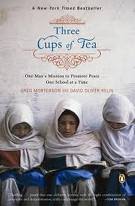
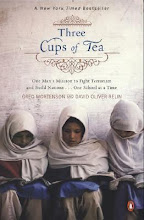
Three Cups of Tea which has sold over 4 million copies, been published in 47 countries, and a New York Times bestseller since its 2007 release, and Time Magazine Asia Book of The Year.
Mortenson was born in 1957, and grew up on the slopes of Mt. Kilimanjaro, Tanzania. His father, Dempsey, founded Kilimanjaro Christian Medical Center, and mother, Jerene, founded the International School Moshi. He served in the U.S. Army in Germany, where he received the Army Commendation Medal, and later graduated from the University of South Dakota in 1983.
In July 1992, Mortenson’s sister, Christa, died from a massive seizure after a lifelong struggle with epilepsy on the eve of a trip to visit Dysersville, Iowa, where the baseball movie, ‘Field of Dreams’, was filmed in a cornfield. To honor his sister’s memory, in 1993, Mortenson climbed Pakistan’s K2, the world’s second highest mountain in the Karakoram range.
While recovering from the climb in a village called Korphe, Mortenson met a group of children sitting in the dirt writing with sticks in the sand, and made a promise to help them build a school. From that rash promise, grew a humanitarian campaign, in which Mortenson has dedicated his life to promote education, especially for girls, in remote regions of Pakistan and Afghanistan.
Mortenson is a living hero to rural communities of Afghanistan and Pakistan, where he has gained the trust of Islamic leaders, military and militia commanders, government officials and tribal chiefs from his tireless effort to champion education, especially for girls. He is one of few foreigners who has worked for sixteen years in rural villages where few foreigners go, and considered the ‘front lines’ of the ‘war on terror’
While not overseas half the year, Mortenson, 52, lives in Montana with his wife, Dr. Tara Bishop, a clinical psychologist, and two young children.
David Oliver RelinIn his work as an investigative journalist, Relin has long been committed to increasing awareness about critical human rights issues. His interviews with child soldiers have been included in Amnesty International reports, and his investigation into the way the INS abused children in its custody contributed to the reorganization of that agency.
David Oliver Relin is a graduate of Vassar and was awarded the prestigious Teaching/Writing Fellowship at the Iowa Writer’s Workshop. After Iowa, he received a Michener Fellowship to support his groundbreaking 1992 bicycle trip the length of Vietnam. He spent two additional years reporting about Vietnam while based in the nation's former imperial capital. In addition to Vietnam and Pakistan, he has traveled to and reported from much of East Asia.
Relin is currently finishing a new book about blindness in the developing world, another book about food, a children’s book with the artist Amy Ruppel, and a novel about land mine survivors in Vietnam. He is a contributing editor for Parade and he has won dozens of national awards for his work as both an editor and an investigative reporter. He feels lucky to make his home in Portland, Oregon.





 Posts
Posts


